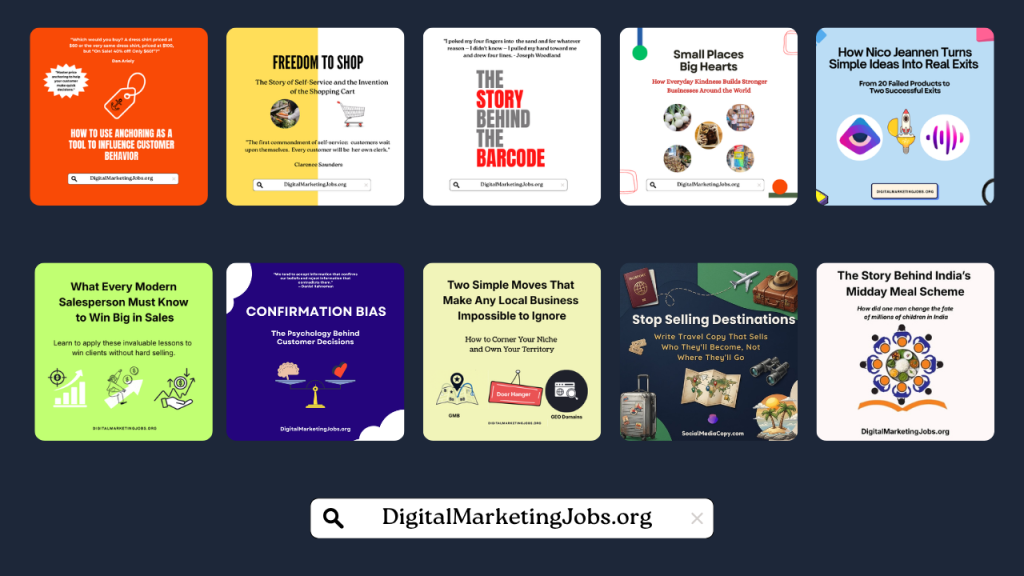
Marketing Books Bundle (11 Books)
Book 1: How to Use Anchoring as a Tool to Influence Customer Behavior
Pricing is the most important element of the 4 Ps of marketing. If you don’t understand how pricing influences customer behavior, you’ll struggle to convert interest into sales.
Even with the right strategy, price-conscious customers will still do their own research before deciding. To help them make quicker decisions, you need one of the most powerful tools in pricing strategy—anchoring.
In this short book, I clearly explain how to use price anchoring effectively to attract customers quickly and confidently.
“Which would you buy? A dress shirt priced at $60 or the very same dress shirt, priced at $100, but ‘On Sale! 40% off! Only $60!’?” — Dan Ariely and Jeff Kreisler
Book 2: Freedom to Shop: The Story of Self-Service and the Invention of the Shopping Cart
The consumer revolution we enjoy today wouldn’t have happened without two visionary pioneers who dared to make shopping easier: Clarence Saunders, inventor of the self-service grocery store, and Sylvan Goldman, creator of the shopping cart.
They weren’t just chasing profits—they were solving real problems for real people.
Long before today’s data-driven corporations, Saunders and Goldman paid close attention to how people actually shopped—where they struggled, what they needed, and how shopping could be easier.
These innovations didn’t just create convenience; they helped spark the explosive growth of modern consumer culture.”
This short book explores the stories behind their breakthroughs—the moments of inspiration, the resistance they faced, and the bold thinking that pushed retail forward.
A timeless lesson for marketers: Focus on the job your customers are trying to get done—not just how to sell more.
“Don’t find customers for your products—find products for your customers.” – Seth Godin
Book 3: The Story Behind the Barcode: From Beach Sand to Checkout Lines
Discover the fascinating story behind one of the most important inventions of the 20th century: The Barcode.
From its humble beginnings to its profound impact on modern retail, this book takes you on a journey through the history of a small yet powerful innovation that reshaped the way we shop, track, and manage products today.
Uncover the struggles, breakthroughs, and visionary thinking behind the barcode’s creation—how two unlikely pioneers, Joe Woodlands and George Laurer inspired by real-world problems, revolutionized the consumer experience. With insights into the challenges they faced, the resistance they overcame, and the lasting legacy they left. This book is a must-read for anyone interested in innovation, technology, or business.
Joseph Woodland – I remember I was thinking about dots and dashes when I poked my four fingers into the sand and, for whatever reason—I didn’t know—I pulled my hand toward me and I had four lines.
I said ‘Golly! Now I have four lines and they could be wide lines and narrow lines, instead of dots and dashes. Now I have a better chance of finding the doggone thing.’ Then, only seconds later, I took my four fingers—they were still in the sand—and I swept them round into a circle.
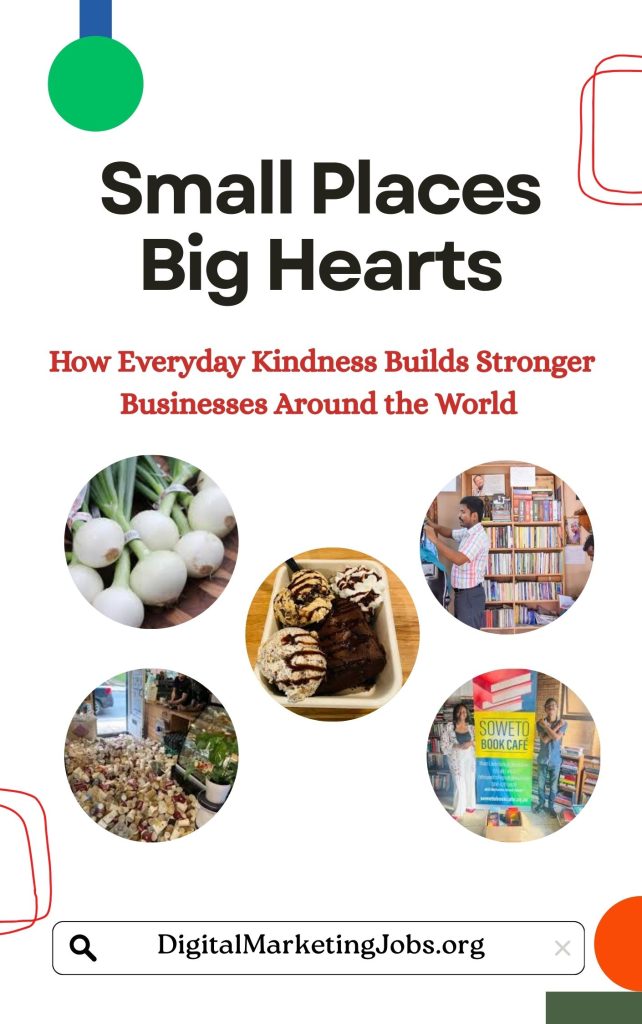
Book 4: Small Places, Big Hearts: How Everyday Kindness Builds Stronger Businesses Around the World
What do an ice cream seller, a bookshop owner, an onion seller, a coffee shop owner, and a humble salon owner in India have in common?
Being Humble and Kind.
This Short book brings together stories of everyday people who turned simple ideas into something extraordinary — like Peter, whose onion business began with the spark of a great domain name, or Pon Mariappan, whose humble salon in India became a center for learning. You’ll also meet the folks behind the Scoop Fund at Everyday Sundae, a coffee shop owner in Kent making a quiet impact, and the passionate team at the Soweto Book Café.
Marketing is never about the full experience of all the facts, specifications and impacts of your product or service. It’s the story we tell ourselves about it. A story of status, affiliation, of change and fear. If that story is true, then you can continue to build on it over time, and users won’t end up disappointed. – Seth Godin
Book 5: Two Types of Brand: Know the Difference and focus your time on what actually matters
This is a short book on purpose. It’s designed to give you a quick but meaningful look into the idea of the two types of brand—without wasting your time on fluff.
Most business books are long and forgettable. This one is short and practical. You can read it in one sitting, come back to it anytime, and most importantly, leave with clarity that frees up your time to focus on what actually matters in business.
Why should you read this very short book?
Because you don’t need to waste time chasing the wrong metrics. In business, what really matters is often simple—but it gets buried under trendy terms and buzzwords thrown around in books and LinkedIn posts to sound ahead of the curve. This book cuts through that noise. It helps you focus on what actually drives results—nothing more, nothing less.
Book 6: Confirmation Bias: The Psychology Behind Customer Decisions
This is a short ebook. It’s meant to give you a clear, focused understanding of how confirmation bias works in marketing—without wasting your time on fluff.
Most marketing books are bloated and forgettable. This one is short, sharp, and practical. You can finish it in one sitting, revisit key ideas when needed, and most importantly, walk away with strategies you’ll actually use.
“We tend to accept information that confirms our beliefs and reject information that contradicts them.”
— Daniel Kahneman
In general, people don’t seek the truth—they seek confirmation of what they already believe.
When marketers use this bias thoughtfully and with integrity, they’re rewarded with trust and loyalty. But if they exploit it through shady or manipulative tactics, it’s only a matter of time before they’re exposed—and lose credibility in the process.
Book 7: How Nico Jeannen Turns Simple Ideas Into Real Exits
This is a short ebook on how Nico Jeannen built a product from scratch and took it all the way to a successful exit.
Nico Jeannen stands as a powerful example for indie hackers and solopreneurs on how to build and scale your business.
Even without any prior coding experience, he taught himself how to code and launched multiple products.
Most of those products never gained paying customers.
But his relentless commitment to shipping again and again —eventually guided him to the breakthrough he was looking for. MakeLogoAI became his first real success: a product he built in 48 hours and later sold for $65,000.
In this book, you’ll find the lessons he learned from more than 20 failures, and the mindset that helped him ship fast and get paying customers.
You don’t have to be great when you start.
You don’t need great skills, novel ideas, or perfect timing.
With consistency, speed, and a deep respect for what the market is telling you, you can create successful products — just like Nico did.
He didn’t stop there, he successfully sold those startups with a $265000 exit.
“If you understand what the customer actually wants, you’ll never depend on luck.”
Book 8: Two Simple Moves That Make Any Local Business Impossible to Ignore
How to Corner Your Niche and Own Your Territory
This is a short e-book on how local businesses can do two simple things that can really make a difference in their bottom line.
You don’t have to invest too much, but a little marketing budget spent on the right things will make all the difference for your local business.
Most marketing books are bloated and forgettable. This one is short, sharp, and practical.
The goal of a marketing book is to give you proven strategies that work, not bore you. You can finish it in one sitting, revisit key ideas when needed, and, most importantly, walk away with strategies you’ll actually use.
“A better domain name will lower your lifetime marketing costs.” – Frank Schilling
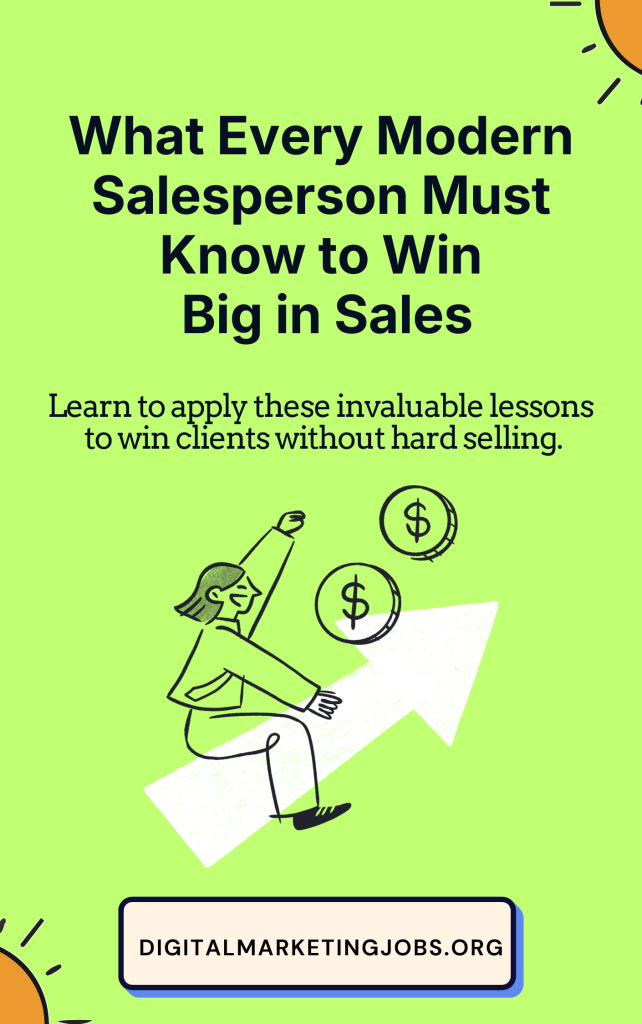
Book 9: What Every Modern Salesperson Must Know to Win Big in Sales
Learn to apply these invaluable lessons to win clients without hard selling.
These principles (gems) and sales lessons are not set in stone; they were given by sales veterans and entrepreneurs who learned everything through perseverance and accepting reality.
They are the real champions who showed us how to win more business when we felt helpless and hopeless.
If you win or close more business after applying these invaluable lessons, be grateful for them and thank those who shared them whenever possible.
“Salespeople are here to produce results by doing the necessary work: Research, Reach out, Follow up, Close deals”
“Law of the Universe: Nothing happens until something moves.
Law of Business: Nothing happens until someone sells something.” – Jeb Blount
Understand the difference between value and price. Price is what you pay; value is what you get. Clients always expect more value for the price—so be prepared to add it wherever it is due.
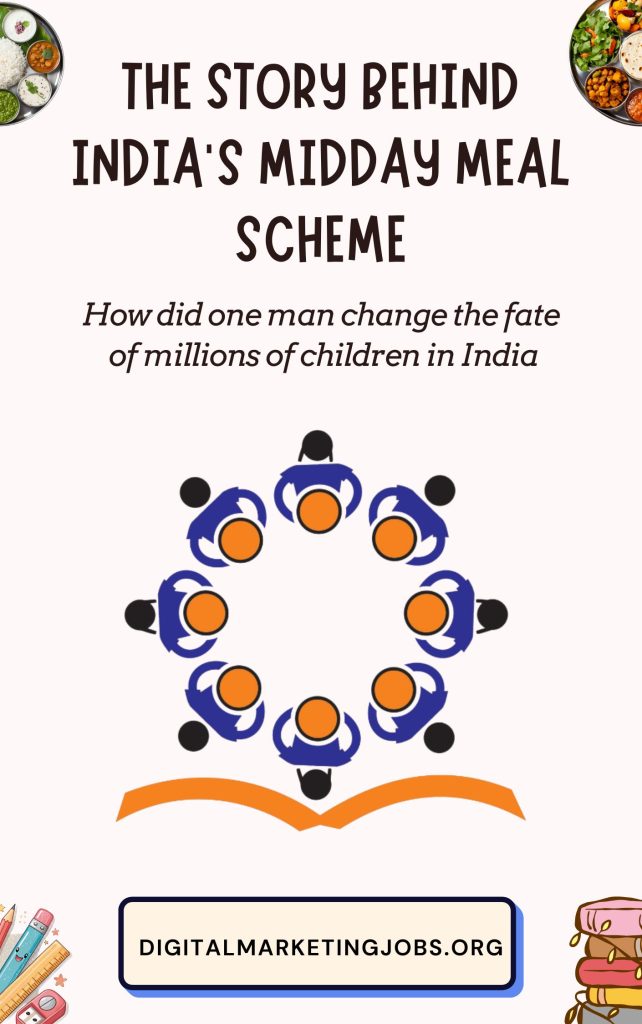
Book 10: The Story Behind India’s Midday Meal Scheme: How kamaraj change the fate of millions of children in India
This is a short ebook on how Kamarajar changed the future of Indian kids after a brief encounter with a young goat herder who had skipped school in a village.
This real-life story is a powerful lesson for marketers: changing the narrative is only possible when you deeply understand the real circumstances and struggles people are living through. Until you do, it’s an uphill task to innovate for your customers.
So instead of shooting from the hip, spend time interviewing your customers—or the people you think face this situation in their day-to-day lives.
Why is this book short? As far as business books are concerned, you need actionable insights to plan your next move and create a strategy.
“No child can study on an empty stomach. Feed them every day so they can learn.”
“If the government is ever unable to fund this scheme in the future, I will travel across Tamil Nadu and beg for money to keep it running.”
“If you build it to be shared, it is far more likely to be shared.
Your idea won’t spread because you want it to, but because the people you want to serve need it.” — Seth Godin
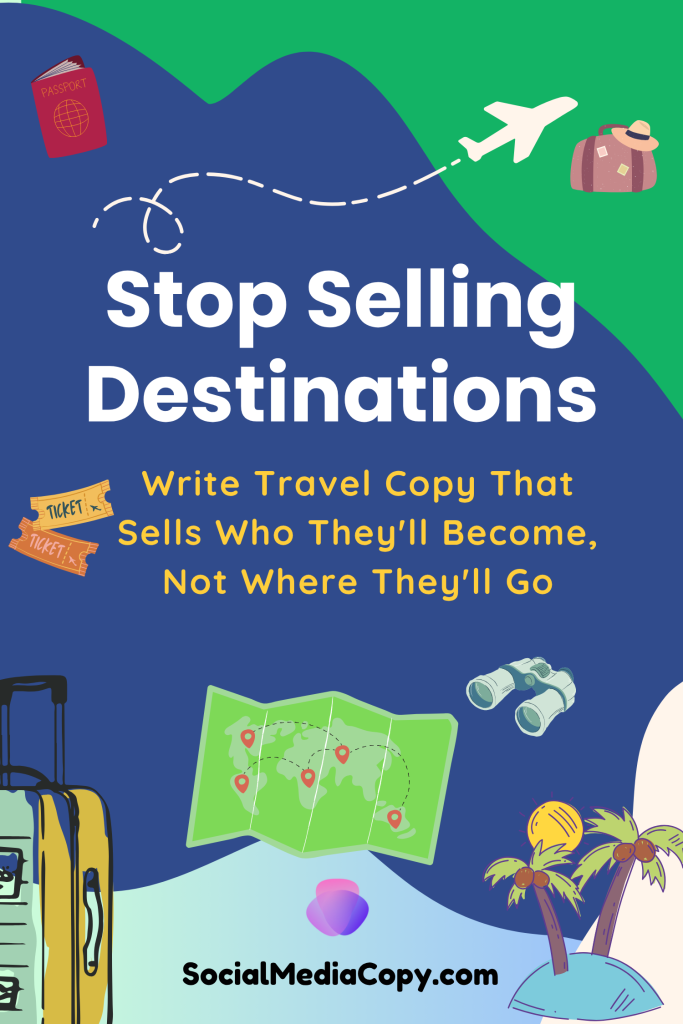
Book 11: Stop Selling Destinations: Write Travel Copy That Sells Who They'll Become, Not Where They'll Go
Inside, you’ll find the Three-Dimensional Copy Framework — a practical system built on Jobs-to-Be-Done theory — designed specifically for travel and hospitality brands that want copy which actually converts.
Most brands write for destinations. This framework teaches you to write for progress — the specific progress your traveller is trying to make.
Because the same person travelling solo has entirely different needs when he books a family trip.
Same traveller. Different progress.
That’s why their circumstances demand entirely different copy.
And that starts with understanding one thing: Every traveller is really booking three things at once. Most brands only sell one of them.
“People don’t buy products. They hire them to get a job done.” – Clayton Christensen.
To Get Digital Marketing Jobs in USA – DigitalMarketingJobs.org
Copy For Hospitality and Travel Brands – SocialMediaCopy.com